
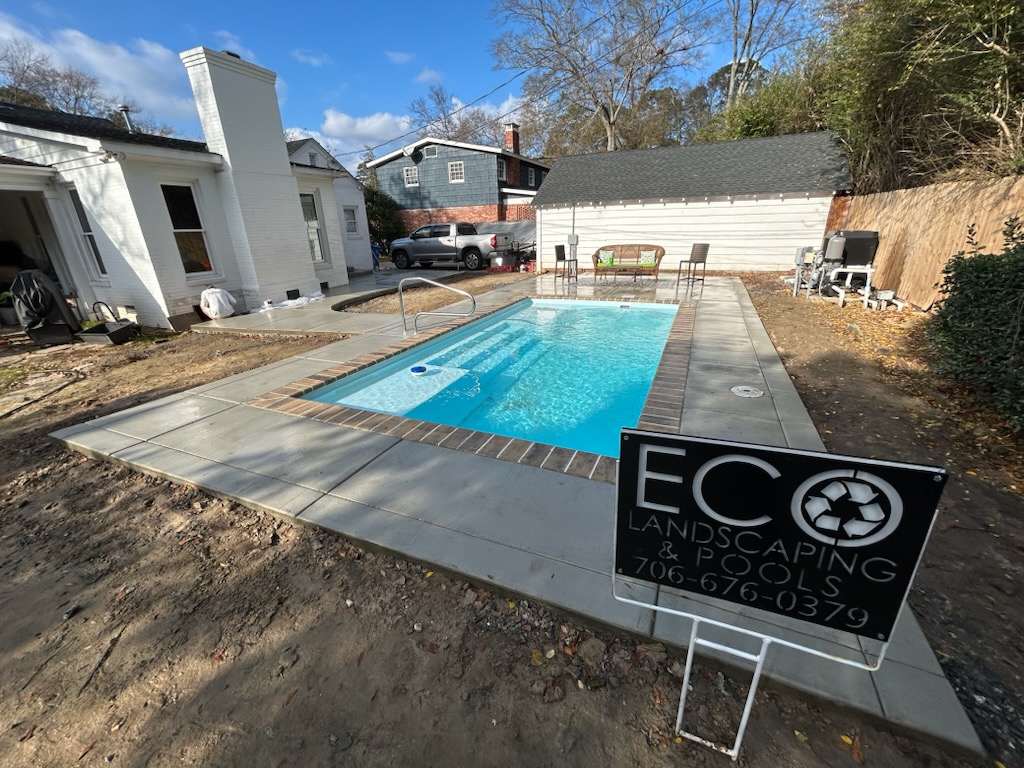
Does your pool feel easy to manage in spring, then turn into a daily chore once the Georgia heat settles in? That shift usually comes down to design decisions that didn’t account for long, hot summers. Surfaces fade faster than expected, water levels drop quicker, and keeping chemistry balanced starts taking more effort than it should. Those problems aren’t random, but are signs that the pool, the equipment, and the surrounding layout weren’t built with this climate in mind.
At Eco Landscaping & Design, we design and build pools that work with Georgia weather, not against it. That includes fiberglass and shotcrete pools, along with the patios, hardscaping, and landscaping that support them. In this guide, we’ll go over how heat affects materials, equipment, layout, and maintenance, and what we do differently to keep pools comfortable and easier to manage through the hottest months.
Georgia summers bring strong sun, high humidity, and long stretches of warm nights. According to the National Oceanic and Atmospheric Administration climate data, average July highs in the region reach around 90 degrees Fahrenheit, with nights staying in the 70s. That means pool water stays warm for extended periods, and surfaces absorb heat day after day.
Those conditions put stress on finishes, decking, and equipment. Materials expand and contract more often, chemical demand increases, and surfaces can break down faster if they’re not chosen carefully. We take all this into account early in our pool design phase.
We match materials to the climate and how you’ll use your pool. A quiet backyard retreat and a high-traffic commercial pool don’t require the same approach.
For shotcrete pools, we often recommend aggregate finishes like PebbleTec. These surfaces handle heat and heavy use well and tend to show less visible wear over time compared to standard plaster.
For fiberglass pools, we install San Juan shells that are manufactured with multiple layers and a durable gel coat finish. These surfaces resist fading, remain smooth, and are easier to maintain in warm conditions.
Beyond the pool itself, the surrounding space matters just as much. We build patios and pool decks using pavers, concrete, or stone selected for heat performance and durability. Lighter colors and textured finishes help reduce surface temperature, which makes a noticeable difference during peak summer afternoons.
We also plan expansion joints, drainage, and transitions carefully so materials have room to move as temperatures change. That reduces cracking and long-term wear.
Hot weather increases the demand on pool systems. Water chemistry shifts faster, filtration needs increase, and equipment runs longer.
We focus on building systems that stay consistent without requiring constant adjustments.
Variable-speed pumps are one of the biggest upgrades we recommend. According to ENERGY STAR, these pumps can use significantly less energy because they run at lower speeds for everyday filtration. That helps maintain water clarity while reducing strain on the system.
Automation also plays a role. We install Jandy systems that allow you to control pump speeds, lighting, and water features from a phone or connected device. That level of control makes it easier to respond quickly when conditions change.
We also pay attention to plumbing layout. Proper pipe sizing and routing reduce resistance, which allows the system to move water more efficiently. That translates into better circulation and more stable water conditions.
A pool that looks great on paper doesn’t always feel great in the middle of July. Comfort comes down to layout, shade, and how water moves through the space. We design these elements together so the pool feels usable throughout the day.
Sun exposure affects everything from surface temperature to chemical stability. Adding shade improves comfort and helps protect the pool over time. So, we often incorporate features like:
Placement matters just as much as the structure itself. Late afternoon sun tends to be the most intense, so we often focus shade on the west and southwest sides of the pool.
We also think about where people enter the water. Steps, tanning ledges, and handrails heat up quickly, so adding shade in those areas makes the space feel more inviting.
Airflow is another factor. Designs that allow for cross-breezes help prevent heat from getting trapped around the pool.
Water movement can make a pool feel more comfortable, especially during peak heat. Features like deck jets, sheer descents, and bubblers increase air movement across the water’s surface. That can create a cooling effect and add visual interest at the same time.
We plan these features with comfort and maintenance in mind. More splash can increase evaporation, so we balance the design to give you the benefits without adding unnecessary upkeep.
Fiberglass and shotcrete pools perform well in Georgia, but they offer different advantages depending on the project.
Fiberglass pools are a strong option for homeowners who want a smooth surface and a simpler maintenance routine. The nonporous finish helps reduce algae growth and makes cleaning easier.
Shotcrete pools offer complete flexibility in shape, size, and features. They’re ideal for properties with unique layouts or for designs that include custom elements such as integrated spas, vanishing edges, or large-scale builds.
We help you choose the right approach based on how you plan to use the pool, the property’s layout, and your long-term maintenance preferences.
Heat changes how a pool behaves day to day. Warm water increases chlorine demand, and strong sunlight breaks down sanitizer more quickly. We design systems and layouts that make maintenance more manageable, but a few consistent habits go a long way.
Algae growth usually comes down to consistency. When sanitizer levels drop, even briefly, it creates an opportunity for growth.
The Centers for Disease Control and Prevention recommends maintaining proper chlorine and pH levels to prevent issues. In practice, that means staying on top of testing and ensuring the pool has strong circulation.
We design return lines and equipment placement to eliminate dead zones where water can stagnate. That helps keep sanitizer distributed evenly throughout the pool.
Evaporation is another common issue during Georgia summers. High temperatures, direct sun, and wind all contribute to water loss. We approach this as both a design and maintenance consideration.
A few strategies that make a difference include the following:
The Environmental Protection Agency’s WaterSense program notes that pool covers can significantly reduce evaporation, which makes them one of the most effective upgrades for water conservation.
We also design water features with flow control so you can adjust output based on conditions, reducing unnecessary water loss while still maintaining the look and feel you want.
A pool doesn’t exist on its own. The surrounding environment plays a major role in how it performs and how enjoyable it feels.
We design and build complete outdoor spaces that support the pool, including:
Plant selection is especially important. We avoid placing heavy leaf-dropping plants near the pool and choose options that hold up well in Georgia’s heat. That keeps the area looking clean and reduces daily upkeep.
Irrigation is another detail we plan carefully. Sprinkler placement shouldn’t interfere with the pool or disrupt water chemistry.
Georgia heat directly affects how pools look, feel, and perform over time. The difference between a pool that stays enjoyable and one that becomes a constant project often comes down to design decisions made at the beginning. We focus on building pools that handle those conditions from day one. That includes choosing the right materials, designing for shade and airflow, and installing equipment that keeps water clear and systems running efficiently.
Whether we’re installing a fiberglass pool or building a custom shotcrete design, the goal stays the same. Create a space that feels comfortable, functions reliably, and holds up through long summers. If you’re planning a new pool or updating an existing one, we can help you build a setup that fits your property and works well in Georgia’s climate. Contact us now.
Both work well. Fiberglass offers easier maintenance, while shotcrete allows for more customization. The best choice depends on the project and how you’ll use the pool.
Warmer water increases chlorine demand and can lead to faster chemical changes. Strong circulation and consistent testing help keep things stable.
Material selection, shade placement, and circulation systems all play a larger role. These factors affect comfort, durability, and maintenance throughout the summer.
Using a pool cover and adding shade are two of the most effective ways to reduce evaporation and maintain water levels.
Address: 8008 Jenkins Rd, Upatoi, GA 31829
Phone: 706-676-0379
Business Hours:
Mon - Fri: 07:00 AM to 05:00 PM
Sat-Sun: Closed

 Site & Marketing By Dream Digital