
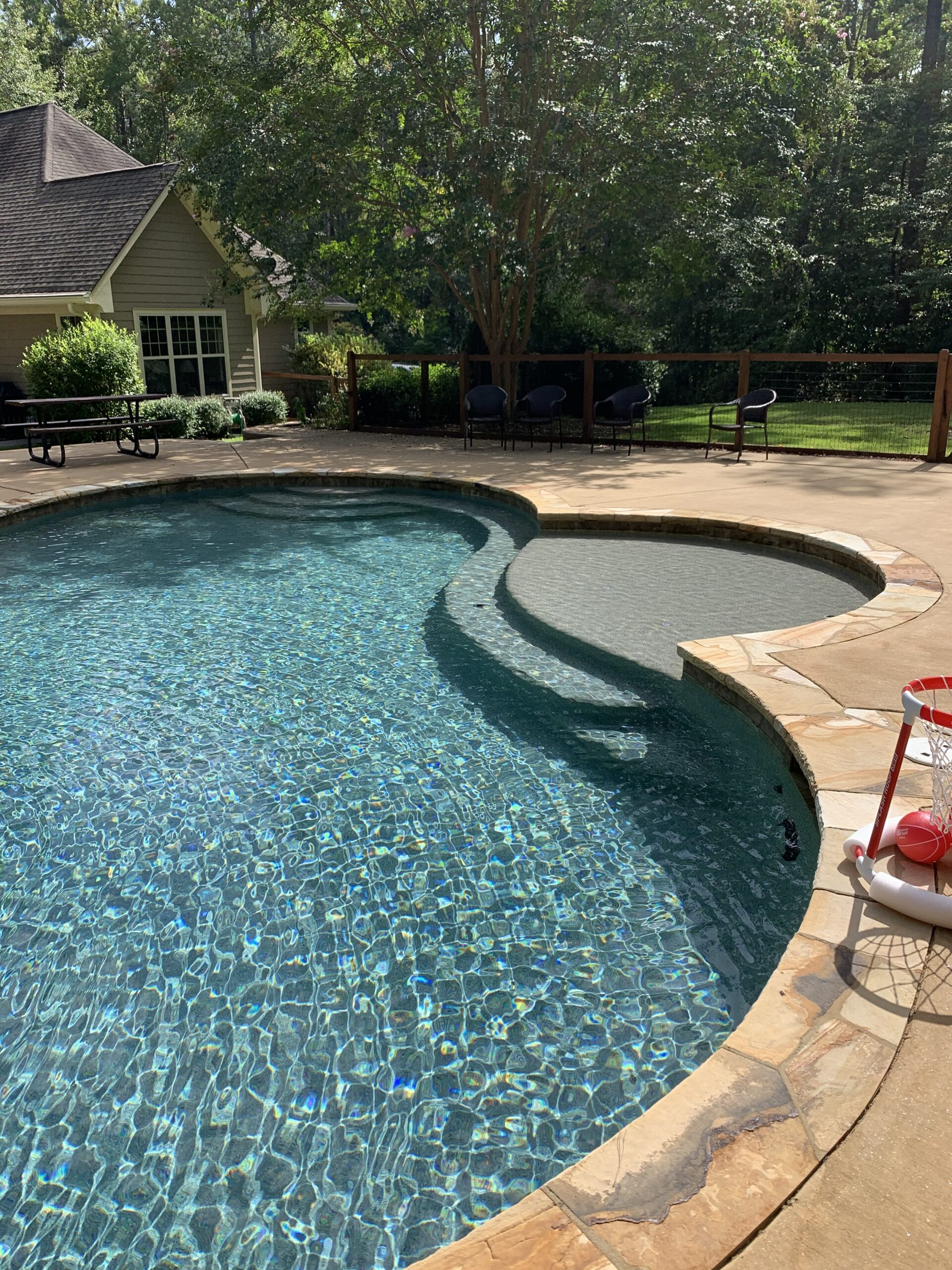
You’ve been dreaming about that perfect backyard pool. You can almost feel the cool water on a hot summer day. But then, the thought of Georgia pool permit requirements hits you, and it feels like a giant roadblock.
As swimming pool contractors, we understand that obtaining a Georgia pool permit is a common concern for many homeowners. However, figuring out the permit requirements is the first step to making your dream a reality without any major headaches. Our guide will walk you through what you need to know, and we promise that it’s not as scary as it sounds.
It’s tempting to think about just starting the digging, but that is a bad idea. A building permit verifies your pool is safe for your family and friends. It also protects your home’s value for the future.
Building without a permit can lead to a stop-work order from the city, forcing all swimming pool construction to halt immediately. You could face significant fines and even be ordered to remove the pool entirely. An unpermitted pool can also create major problems when you try to sell your home or file an insurance claim.
Georgia follows the International Swimming Pool and Spa Code (ISPSC). Think of this as the main rule book for pool safety. Your local city or county building office is the one that enforces it.
Getting a permit isn’t a one-size-fits-all process. It depends on where you live in Georgia.
Your very first move should be to contact your local building department. This is where you’ll get the most accurate information. They’ll tell you everything you need for your specific area.
They can explain local zoning laws, which dictate how land can be used. These laws include rules about setbacks, the required distance your pool must be from your property line, home, and other structures. Some areas may have additional pool regulations related to water conservation or drainage. Most counties have this information on their websites.
Getting the county’s permission is a huge step, but don’t forget about your HOA. Sometimes, its rules can be even more strict. You’ll want to get its approval before you get too far into the process.
Once you know the rules, it’s time to get your paperwork together. You’ll need a detailed site plan of your property. This plan, often based on a recent property survey, is a map of your backyard project.
Your plan should show property lines and the exact location of the new in-ground pool. Include the pool’s dimensions, depth, and the location of equipment, such as pumps and filters. You must also show the plans for the safety fence.
With your site plan ready, you can fill out the official application and pay the fees. Some places let you do this online, while others want you to come in person. After you submit everything, there will be a waiting period while they review your plans.
The safety barrier is a huge part of the approval process. This is something every inspector will be looking at very closely. State and local building codes have clear pool barrier requirements to keep everyone, especially kids, safe.
A simple pool cover isn’t enough to meet the state’s pool safety rules. You need a permanent physical barrier. Here are the key things to know about your pool fence.
| Requirement | Georgia State Specification |
|---|---|
| Minimum Height | 48 inches (4 feet) from the ground. |
| Gate Type | Must be self-closing and self-latching. |
| Gate Swing | Should open outward, away from the pool area. |
| Latch Height | At least 54 inches from the bottom of the gate. |
| House as a Barrier | Permitted if doors have alarms that sound within 7 seconds. |
| Ground Clearance | No more than 2 inches between the fence bottom and the ground. |
While you can use chain link fences, the mesh openings can’t exceed 1 1/4 inches square unless they use slats to reduce the openings. Vertical balusters on other fences can’t be more than 4 inches apart to prevent a child from squeezing through. These details are important for passing your final inspection.
Your pool project will be inspected several times during construction. This is normal, and it helps make sure everything is being built correctly and safely. You’ll need to schedule these appointments as you reach certain stages.
Typically, there are four main pool inspections:
Passing each of these inspections is required to move on to the next phase of your swimming pool construction and installation. Once you pass the final inspection, you’re ready to fill the pool and enjoy your new backyard oasis.
A few common issues can trip people up. One big one is not knowing where your underground utility lines are. Always call 811 to have lines marked before you finalize your pool’s location. The Georgia 811 Utilities Protection Center can save you from a very expensive mistake.
Another issue can be your home’s electrical panel. Sometimes it needs an upgrade to handle the pool equipment, which adds to the cost. Finally, don’t assume an existing fence will pass inspection, because it may need updates to meet current pool codes.
You should also check for any easements on your property, which are legal rights for others to use a portion of your land. You can’t build a permanent structure, like an in-ground fiberglass pool, on an easement. Be aware of any septic tanks or drain fields, as your pool must be a safe distance away from them.
It might seem like a lot of work to get a pool permit. But taking the time to understand and follow the Georgia pool permit requirements is worth it. It confirms your beautiful new pool is a safe and valuable addition to your home for years to come.
Address: 8008 Jenkins Rd, Upatoi, GA 31829
Phone: 706-676-0379
Business Hours:
Mon - Fri: 07:00 AM to 05:00 PM
Sat-Sun: Closed

 Site & Marketing By Dream Digital